
Vaccine safety is a top priority of healthcare authorities such as the Centers for Disease Control and Prevention (CDC) and the New Jersey Department of Health. CDC ensures that vaccines meet strict safety standards. Parents remain confused about vaccine safety due to misinformation, side effects, too many vaccines at a time, and combination treatment. The Food and Drug Administration rigorously tests every vaccine. It is only recommended by the Advisory Committee on Immunization Practices if it is safe and effective to use in the U.S.
Vaccines are mandatory for children to get an entry in NJ schools. New Jersey School Immunization laws are strict but with limited medical and religious exemptions. Parents can get vaccines from pediatric clinics, pharmacies, and public health centers.
The New Jersey Immunization Information System (NJIIS) is an official immunization registry in NJ to keep a full track of all vaccination documents and records of adults, kids, and adolescents. The Docket app helps parents extract their children’s immunization records and provide proof of immunization to NJ schools.
Are Vaccinations Safe?
How Vaccines Are Tested and Approved in the U.S.
Vaccines are tested and approved in the U.S by following a rigorous testing process. Vaccine undergoes multiple rounds of evaluation overseen by the Food and Drug Administration (FDA). The Advisory Committee on Immunization Practices (ACIP) recommends vaccines for use only when a product meets strict scientific and safety standards.
Clinical Trial Phases
Vaccines go through four phases of testing known as clinical trials. Phase 1 involves testing the safety and dosage of the vaccine in Small groups of people (20 to 100). Phase 2 includes hundreds (100-300) of trial participants to assess immune response and side effects. Phase 3 expands the clinical trial to thousands of volunteers (1,000–3,000) to test the efficacy of the vaccine and identify less common adverse events. Phase 4 begins after the FDA approves a vaccine for use in the general population. Phase 4 is a formal study of the effectiveness of the vaccine and continues for a long period.
Ongoing Safety Monitoring Systems
Vaccines are continuously monitored after the FDA approves a vaccine through systems like VAERS (Vaccine Adverse Event Reporting System) and VSD (Vaccine Safety Datalink). VAERS collects reports of any post-vaccination side effects. VSD is a collaboration of the CDC with several healthcare organisations. The purpose of this collaboration is ongoing surveillance of the vaccine’s effects.
The CDC approval
The CDC director will decide whether to approve the ACIP recommendation for a vaccine or not. A vaccine becomes the official CDC public health guidance for safe use of the vaccine in the United States after the CDC approval. This approval leads to a vaccine becoming a part of the official U.S. adult and childhood immunization schedules.
Post-Approval Surveillance
Post approval surveillance and real-world monitoring of approved vaccines continue to check their effectiveness and safety. Surveillance includes periodic safety updates and observation studies. In contrast, monitoring by state and federal health authorities provides parents peace of mind.
New Jersey Vaccine Requirements for Children
Parents must know about NJ school vaccine requirements to ensure that their children can attend daycare, school, and college without issues. New Jersey follows a structured immunization schedule aligned with national guidelines. The New Jersey Immunization Information System maintains complete records to track compliance and vaccine history.
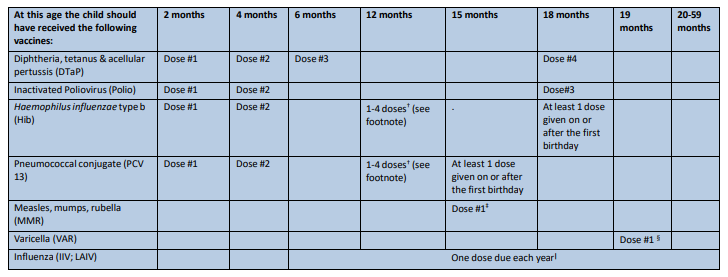
Required Vaccines for Daycare and Preschool
This chart provides NJ Child Care/Preschool Immunization Requirements. Exemptions to these are specified in the Immunisation of Pupils in School rules, New Jersey Administrative Code (N.J.A.C. 8:57-4). Reference
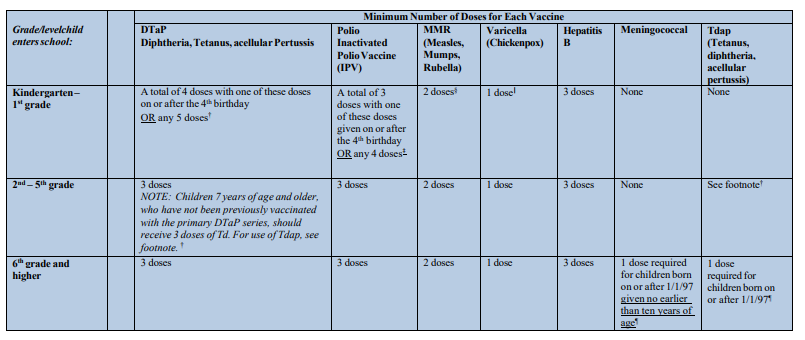
K–12 School Immunization Requirements
This chart provides K-12 School immunization requirements for kids. Parents can check the minimum dose required for kids to attend NJ schools. Reference
Addressing Common Vaccine Myths (Debunked)
Misinformation related to vaccines always confuses parents, but addressing common vaccine myths helps parents make a confident health decision for their kids.
Listed below are some common vaccine myths vs facts.
What Vaccines Are Safe For Children?
Does Dovaccinese cause autism?
Vaccinations are not associated with the development of autism or autism spectrum disorder. Furthermore, the components of the vaccines (thimerosal or mercury) or multiple vaccines (MMR) are not associated with the development of autism or autism spectrum disorder, according to 2014 case studies and meta-analysis by Luke E Taylor.
Do vaccines lead to infertility or diabetes?
Vaccines are not associated with conditions like infertility or diabetes. No association between HPV vaccination and infertility in U.S. females 18-33 years old, according to a 2020 study by Nicholas B Schmuhl.
According to a 2021 article by Jason M. Glanz, titled “The Childhood Vaccination Schedule and the Lack of Association With Type 1 Diabetes, the recommended vaccination schedule is not positively associated with the incidence of T1DM in children. These results support the safety of the recommended childhood immunization schedule.
Are Measles-containing vaccines safe?
Yes, Measles-containing vaccines are safe for children.
There is no harmful association between MMR vaccine receipt and ASD, even among children already at higher risk for ASD, according to a 2015 study by Anjali Jain, MD, titled “Autism Occurrence by MMR Vaccine Status Among US Children With Older Siblings With and Without Autism.”
Too many vaccines, too soon
Parents are concerned that a large number of vaccinations at an early age may overwhelm or weaken an infant’s immune system. According to a 2002 study by Paul A. Offit, titled “Addressing Parents’ Concerns: Do Multiple Vaccines Overwhelm or Weaken the Infant’s Immune System?”, the number of immunologic components in vaccines has declined over time. The current 14 vaccines on the United States schedule contain 200 immunologic proteins in total; the smallpox vaccine contained 160.
HPV vaccine increases risk of autoimmune disease
According to a 2013 cohort study titled “Autoimmune, neurological, and venous thromboembolic adverse events after immunisation of adolescent girls with quadrivalent human papillomavirus vaccine in Denmark and Sweden”, researchers administered more than 696,000 doses of HPV-4 vaccine and found no evidence of an association with AI disorders.
Common Vaccine Side Effects vs. Rare Risks
Listed below are common vs rare vaccine side effects for children.
- Common Vaccine side effects: Common vaccine side effects are normal and do not require parents to seek medical advice or attention. Most reactions are mild and temporary as they signal that the immune system is responding as expected. Mild side effects of vaccines are slight swelling and soreness at the injection site and a low-grade fever. Some children feel tired for a short period. Common side effects last up to 2 days.
- Rare Adverse Reactions: Rare adverse reactions to the vaccine are uncommon and require a parent to seek immediate medical attention and advice. Rare side effects of vaccines include allergic responses such as hives, swelling of the face, and trouble breathing.
When to call a doctor?
Immediately call a doctor if fever or soreness persists beyond four days or if you notice rare allergic reactions.
NJ Vaccine Exemptions: What Parents Should Know
Parents should know about NJ Vaccine exemptions, such as medical exemptions and religious exemptions.
Medical exemptions are allowed in NJ if a licensed physician determines that a specific vaccine may be harmful to your kid due to some medical conditions (immune system disorder, allergies). Parents must properly document and submit medical exemptions as per guideline set by the New Jersey Department of Health.
Religious exemptions in NJ are permitted if vaccination conflicts with a family’s sincerely held religious beliefs. Parents or guardians must provide a written statement explaining these religious beliefs, and the guardian or parent must sign this statement. Only a written statement with the hand-written signature is allowed by NJ policies. NJ Vaccination exemptions are not accepted on the grounds of moral, personal, or philosophical objections.
Important Note: Children with exemptions must be excluded from the school during outbreaks of vaccine-preventable diseases to protect public health.
How to Prepare Your Child for Vaccination
Listed below are 3 tips you should follow to prepare your child for vaccination and reduce vaccine anxiety.
- Explain what will happen before the appointment: Explain in a simple and calm language what to expect from the appointment. You must reassure your kid that the shot is quick and will keep the kid healthy. Always bring a favorite toy or comfort item that helps ease the stress of your kid.
- Stay relaxed during the shot: Stay calm and relaxed during the shot because your kid will mirror your emotions. Hold the hand of your kid, maintain eye contact and distract your kid with something like talking, a toy, or a short video.
- Offer praise and comfort after the appointment: Offer praise and comfort after the appointment to reinforce a positive experience for your kid. Your kid may notice mild side effects of vaccination, such as fever and soreness. These side effects are normal. After care, like hydration and proper rest, will eliminate these effects.
NJIIS and Docket App: Simplifying Immunization Records for Parents
The New Jersey Immunization Information System (NJIIS) is New Jersey’s official immunization registry. The New Jersey Department of Health manages NJIS to keep full track of immunization records of children, adolescents and adults. The Docket is a digital platform that extracts data from NJIS and helps parents access and manage their children’s immunization records easily. Docket app ensures that parents stay compliant with NJ school vaccine requirements by reducing paperwork and preventing missed vaccines. Busy parents get quick and reliable access to their children’s immunization records in NJ through docket app.
Where to Get Vaccinations in New Jersey?
Local pediatric clinics, pharmacies and public health centres are safe and convenient options to get vaccinations in New Jersey. Local pediatric clinics have licensed paediatricians who follow the latest guidelines from the Centers for Disease Control and Prevention and maintain accurate immunisation records. NJ Pharmacies provide accessible vaccination services to older children and adolescents.
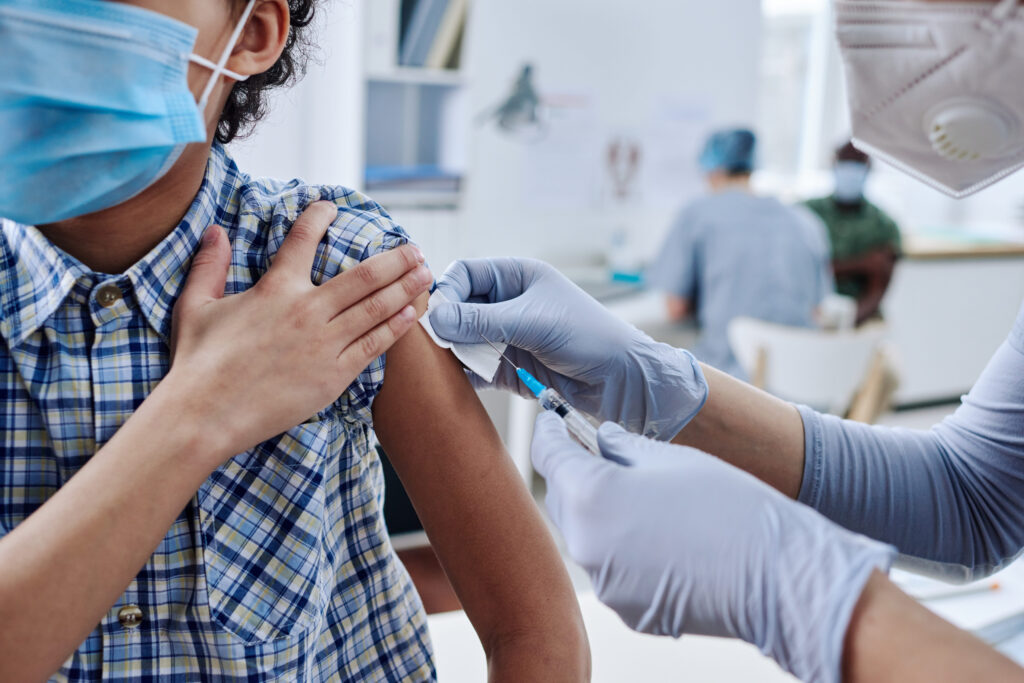
We Offer Vaccinations In Our Howell, NJ location
Pharmacies follow state-approved protocols and offer extended hours for busy parents. Pharmacists administer vaccines (flu shots, COVID-19 vaccines) with minimal wait times. Public health centers and community clinics get support from the New Jersey Department of Health. Eligible families access low-cost or free vaccines through the Vaccines for Children (VFC) program. Public health centres ensure that all children have access to mandatory immunization regardless of insurance status while following vaccination safety standards.
FAQs
Are vaccines mandatory for school in NJ?
Yes, vaccines are mandatory for school in NJ.
Can I delay my child’s vaccines?
No, you can not delay your child’s vaccines. Delay makes your child vulnerable to preventable diseases. It is recommended to follow the CDC schedule for timely protection.
What happens if my child misses a vaccine?
You must consult a pediatrician who provides a catch-up schedule based on age and previous dose if your child misses a vaccine.
Are combination vaccines safe?
Yes, combination vaccines are safe. Combination vaccines are tested for safety and efficacy. They reduce the number of injections while protecting against multiple diseases.
Do vaccines overload the immune system?
No, vaccines do not overload the immune system. Your child’s immune system can handle many antigens simultaneously, and antigens in the vaccines are within the natural capacity of the system, so it responds safely.
Will my child be okay if she has a side effect?
Yes, your child will be if she has a side effect. Mild side effects are temporary and go away within 1 to 2 days. Severe reactions are rare, and medical help is available if an adverse side effect occurs.
Will ingredients in vaccines hurt my baby more than possibly getting the disease could?
No, ingredients in the vaccine will not hurt your baby more than possibly getting the disease could. Vaccine ingredients are carefully regulated and safe, while the diseases they prevent are far more harmful than the ingredients.
Can unvaccinated kids go to school in New Jersey?
No, unvaccinated kids can not go to school in New Jersey unless they have an approved medical or religious exemption.
What information should be shared with parents about childhood immunizations?
Information such as recommended schedule, benefits of each vaccine, possible side effects, and the risks of vaccine-preventable diseases should be shared with parents about childhood immunizations. Guidance from the Centers for Disease Control and Prevention (CDC) and NJ health authorities also matters.
What are the common concerns parents have about vaccinations?
Vaccine safety, side effects, the number of vaccines, ingredients, and misinformation are the common concerns parents have about vaccination.
Are unvaccinated kids more sick?
Yes, unvaccinated kids are more likely to get sick as they are at high risk of serious illnesses such as influenza, measles, and whooping cough.
What vaccines are required for college in NJ?
NJ Colleges students are required to provide valid proof of immunization against Hepatitis B, Mumps, Measles, Rubella (MMR), and Meningococcal Disease