

My daughter came home from school last September with a cold. Two days later, my son had it. By the weekend, I was down for the count. This happened three separate times between October and February. I spent half of last winter feeling like garbage.
I’m not big on supplements. My kitchen counter isn’t covered in bottles of stuff I read about on Instagram. But after getting knocked out repeatedly last year, I started asking questions. What actually works? Not trendy wellness products or things my neighbor swears by—what does research support for staying healthy through fall and winter here in New Jersey?
Turns out there are a few essential vitamins that make a real difference. Not miracle workers. You can’t pop some pills and become immune to everything your kids bring home from school. But the right ones, taken regularly, give your body what it needs to function properly. Most of us aren’t getting enough from food, especially when schedules get crazy and dinner becomes whatever you can throw together in 20 minutes.
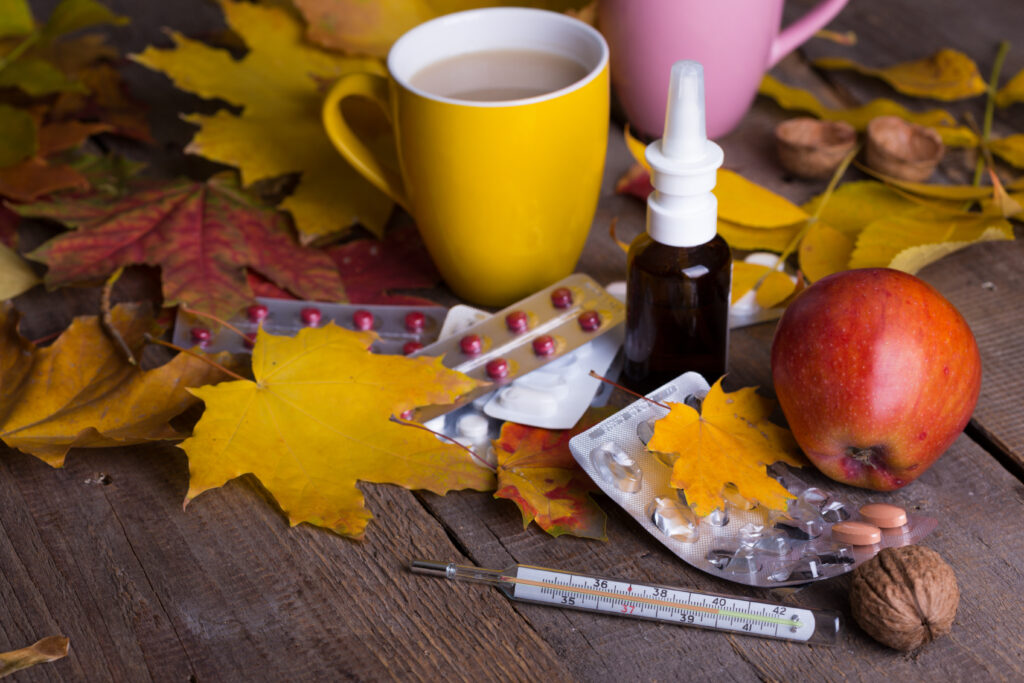
Boost Your Immune System With Vitamins
Vitamin D Changed How I Feel
I had my vitamin D tested last November after months of feeling exhausted and just worn down in a way that didn’t make sense. My doctor called with the results, and I was deficient. This shocked me because I’m outside regularly. I walk the dog. I’m not sitting in a dark room all day.
She explained that the sun angle matters. Summer in Howell, NJ, gives us long days and strong sun. Your skin makes vitamin D when direct sunlight hits it. But by late October? We’re down to maybe 10 hours of daylight, the sun is lower in the sky, and it’s not strong enough to trigger vitamin D production. Combine that with cooler weather and everyone wearing more clothes, and suddenly nobody’s making enough.
The immune system connection wasn’t something I’d thought about. I assumed vitamin D was just for bones. But people with adequate levels fight respiratory infections better. The difference isn’t small; it’s significant enough that my doctor said she tests everyone who comes in complaining about getting sick constantly.
Most adults need 1,000 to 4,000 IU daily through fall and winter. I take 2,000 every morning. My husband takes 4,000 because his levels were even lower than mine. The best vitamins for immunity include D3 specifically—that’s the form your body uses. D2 is cheaper but doesn’t work nearly as well.
You can get some from food. Salmon, egg yolks, fortified milk. But you’d need salmon daily to hit adequate levels, and that’s not happening in my house. Supplementing makes sense here from about October through April.
Vitamin C Works Differently Than I Thought
My mom gave me vitamin C tablets anytime I got sick as a kid. Orange juice and chewable vitamin C were her go-to cold remedies. I grew up thinking it prevented colds entirely.
That’s not how it works. Taking vitamin C after you feel symptoms starting doesn’t do much. You’re already sick, and the cold is happening. But taking it consistently before you get sick can reduce how long you’re miserable and how bad it gets. We’re talking maybe a day or two shorter duration, symptoms that aren’t quite as awful. When you’re congested and can’t sleep and everything hurts, a day matters.
Your immune cells actually need vitamin C to function. Stress burns through it faster. Fighting an infection uses it up quicker. Most people only think about vitamin C when they’re already sick, which is backwards.
The dose that helps is higher than the basic daily recommendation. Around 500 to 1,000 mg instead of the 75-90 mg minimum. I take 500 with breakfast and 500 with dinner. It’s water-soluble, so whatever your body doesn’t need gets peed out. Not harmful, just means you’re not storing it up.
Bell peppers, broccoli, strawberries, and citrus, all good sources. But when fall hits and I’m running kids to activities and working and trying to keep the house from falling apart? My diet isn’t consistent enough to count on food alone.
Zinc Surprised Me
I didn’t know anything about zinc for immune health until my sister mentioned it last year. She’s a nurse and kept telling me to take it. I ignored her for months because I figured she was just trying to get me to buy more supplements.
Then I actually looked into it. Zinc helps develop T-cells, which are part of your immune system’s infection-fighting response. Low zinc means fewer effective T-cells. That’s a problem when every surface your kid touches at school has germs on it.
You get some from meat, shellfish, beans, and nuts. But absorption varies wildly depending on what else you’re eating. Beans and whole grains contain phytates that block zinc absorption. Stress affects how your body uses it. Some medications interfere with it.
For immune support, 15-30 mg daily works for most adults. More than that causes problems long-term. Those zinc lozenges you see at the pharmacy work differently—higher doses for just a few days when you first feel something coming on. Some evidence suggests they help if you start within 24 hours, but I’ve never been organized enough to catch it that early.
I keep zinc around during the fall because it’s easy to be deficient without knowing. When everyone in Howell is passing around whatever’s going around, I want every advantage.
B Vitamins Don’t Get Mentioned Enough
Nobody’s talking about B vitamins for immunity. Everyone focuses on C and D, but B6, B9, and B12 matter. They help produce the cells and antibodies your immune system uses.
I’m constantly tired in the fall. Daylight’s gone by 5 p.m. Kids have homework and activities. Work doesn’t slow down. Being exhausted all the time weakens your immune system. Your body can’t mount a decent defense when you’re running on empty.
B vitamins are in meat, eggs, dairy, greens, and beans. But if your diet is inconsistent, and whose isn’t, you might not get enough. A B-complex covers all of them without having to track each one separately.
They’re water-soluble like vitamin C. Extra gets flushed out instead of building up. Which means you need them regularly rather than being able to take a bunch once and be set.
Making Yourself Actually Take Them
Five bottles of supplements sitting in your cabinet don’t do anything if you forget about them. I’ve bought vitamins with the best intentions and then not taken them for weeks at a time.
The only thing that works for me is keeping them visible. Mine sits next to the coffee maker. I see them while coffee brews, take them with breakfast, done. If they’re in a cabinet, I forget they exist.
Quality matters more than I realized. I bought cheap multivitamins at first and they did nothing. Cheap supplements sometimes don’t contain what the label says, or your body can’t absorb them properly. You don’t need the fanciest brand at the health food store, but the $4 bottle at the gas station is probably worthless.
These are supplements. They supplement. They don’t replace sleep or decent food, or managing stress. If you’re getting four hours of sleep and eating takeout every night, vitamins won’t save you. But when life is chaotic, which fall always is, they fill gaps.
I’m not trying to boost immunity to superhero levels. That’s not a thing. I just want to support the system I’ve got so it works when my kids bring home whatever’s circulating through their school.
Last fall, I started taking D, C, zinc, and B-complex every day. Did I avoid getting sick completely? No. But I got one cold instead of three. It lasted four days instead of ten. I didn’t miss work. That alone made the whole thing worth it.
This fall I’m doing the same thing. Maybe I’ll get lucky and avoid everything. More likely, I’ll still get something because that’s life with school-age kids. But I’d rather deal with one mild cold than three miserable ones.